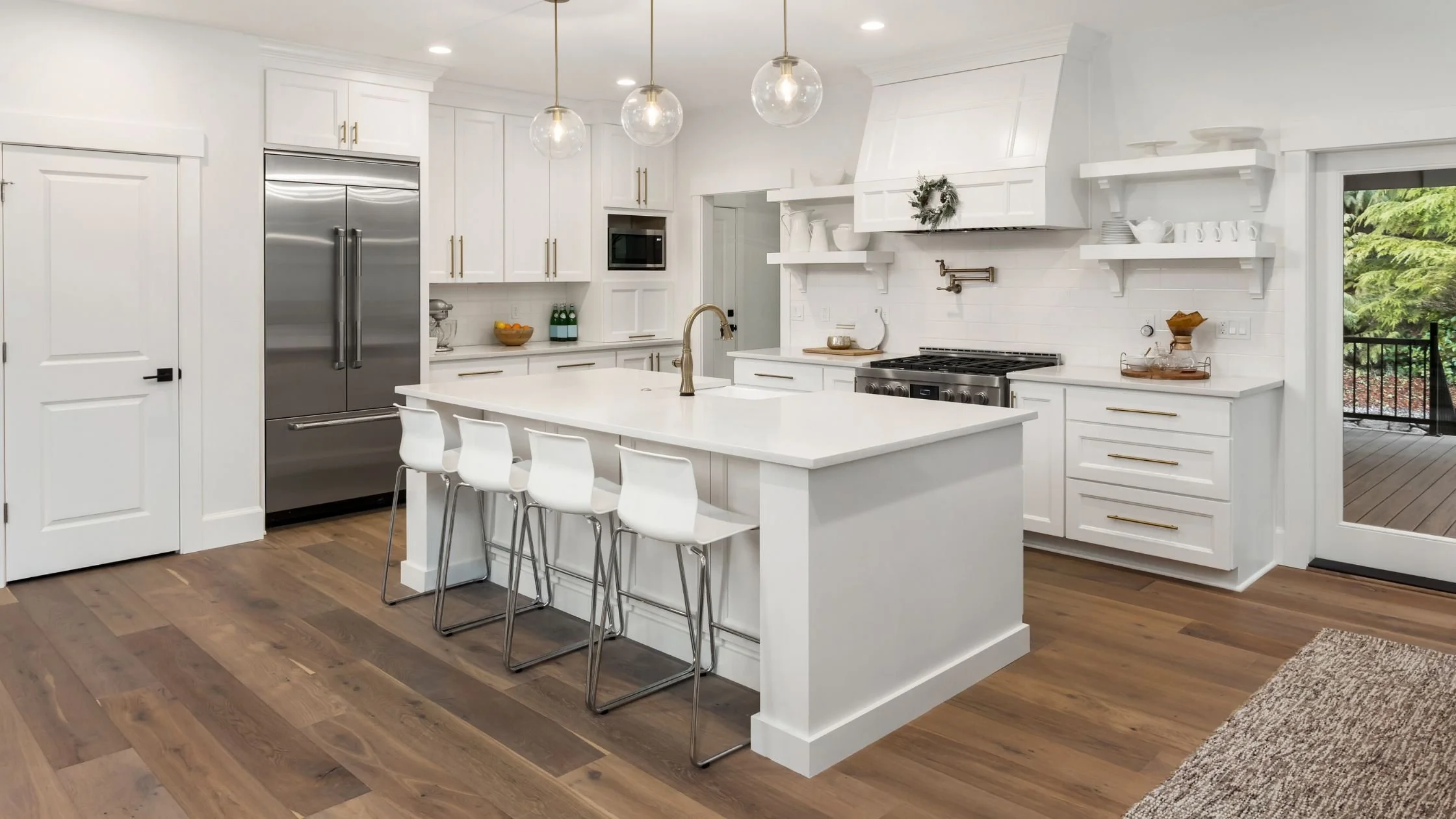
Creating a Cohesive Look Starts with the Right Flooring
When renovating a kitchen or updating your home's interior, choosing the right flooring can be one of the most challenging design decisions.
Your floors cover a large portion of the room, making them a major visual element that influences how cabinetry, countertops, wall colors, and furniture work together.
Selecting a beautiful flooring material is important, but choosing one that complements your existing finishes is what creates a truly cohesive design.
For homeowners wondering how to match flooring with cabinets, understanding color undertones, contrast, texture, and lighting can make the selection process much easier.
Whether you're updating a traditional kitchen in Franklin or creating a modern interior in Brentwood, the right flooring can bring the entire space together.
Start by Identifying Your Cabinet Color and Undertones
Before choosing flooring, take a closer look at the color of your kitchen cabinets.
Cabinet finishes often contain subtle undertones that influence which flooring colors will look best alongside them.
These undertones generally fall into three categories:
Warm undertones: Golden, honey, red, and orange influences
Cool undertones: Gray, blue, or ash-colored influences
Neutral undertones: Balanced colors without a strong warm or cool appearance
For example, honey oak cabinets typically have warm undertones, while certain painted gray cabinets may have cooler undertones.
Understanding these differences helps you select flooring that complements the cabinetry rather than competing with it.
Choosing Flooring for White Kitchen Cabinets
White cabinets are popular because they create a clean, versatile foundation that works with many flooring styles.
However, the shade of white matters.
Warm white cabinets may pair beautifully with natural oak or soft beige flooring, while cooler white cabinets can complement neutral or slightly cooler wood tones.
Flooring Options That Pair Well with White Cabinets
Natural oak hardwood
Light wood-look luxury vinyl plank
Warm medium-brown flooring
Soft neutral laminate
Rich dark wood for added contrast
For homeowners seeking a bright, open kitchen, light flooring can enhance the airy appearance of white cabinetry.
If you prefer a more dramatic design, darker flooring can create contrast and give the space additional depth.
Matching Flooring with Natural Wood Cabinets
Wood cabinetry brings warmth, character, and texture into a kitchen.
However, pairing wood cabinets with wood-look flooring requires thoughtful consideration.
Choosing two wood finishes with nearly identical colors but noticeably different undertones can create an unintentional mismatch.
Instead, consider creating contrast between the cabinetry and flooring.
For example, medium-toned wood cabinets may look beautiful with lighter natural oak flooring.
Darker cabinets can also pair well with lighter flooring, helping prevent the room from feeling visually heavy.
Tips for Combining Wood Finishes
Identify the dominant undertone of the cabinets.
Choose flooring with a complementary undertone.
Create enough contrast to distinguish the surfaces.
Avoid combining too many competing wood grain patterns.
View samples together in the actual room.
The goal isn't necessarily to match the cabinets perfectly. It's to create a balanced relationship between the finishes.
Best Flooring Colors for Dark Kitchen Cabinets
Dark cabinetry can create a sophisticated and dramatic appearance, especially in kitchens with generous natural lighting.
However, combining dark cabinets with equally dark flooring may make some spaces feel smaller or heavier.
Lighter flooring can provide contrast and help balance the overall design.
Popular combinations include:
Espresso cabinets with natural oak flooring
Dark walnut cabinets with warm beige wood tones
Charcoal cabinets with light neutral flooring
Deep green cabinets with medium natural wood finishes
For homeowners who prefer a darker overall palette, rich wood flooring can still work beautifully.
The key is balancing the cabinetry and flooring with appropriate countertops, wall colors, and lighting.
Don't Forget About Your Countertops
Kitchen countertops are another major design element that should influence your flooring selection.
Natural stone, quartz, butcher block, and other countertop materials introduce additional colors and textures into the space.
For example, a countertop with prominent veining may pair best with flooring that has a more subtle grain pattern.
This prevents the two surfaces from competing for attention.
If your countertops feature warm beige or cream tones, flooring with similar warmth can create a coordinated appearance.
For cooler gray or white countertops, neutral flooring may provide a balanced foundation.
Rather than selecting flooring in isolation, compare samples alongside your cabinets and countertops.
How Flooring Texture Influences Kitchen Design
Color isn't the only factor that affects how flooring coordinates with cabinetry.
Texture can also influence the overall appearance of a room.
A rustic wood-look floor with pronounced grain may create a casual, natural aesthetic.
A smoother surface with subtle grain variation can feel more contemporary and refined.
Consider Your Kitchen's Design Style
For modern kitchens, clean lines and understated flooring textures often work well.
Traditional kitchens may benefit from natural wood grain and warmer finishes.
Farmhouse-inspired kitchens frequently incorporate light oak tones, textured finishes, and neutral palettes.
Transitional kitchens can combine classic cabinetry with contemporary flooring for a balanced appearance.
Choosing flooring that supports the overall design style helps create a kitchen that feels intentional rather than disconnected.
Should Kitchen Flooring Match the Rest of Your Home?
One of the most important considerations during a kitchen renovation is how the new flooring will connect with adjoining spaces.
If your kitchen opens into a dining room or living area, choosing flooring that complements the surrounding rooms can create a more cohesive design.
In some homes, using the same flooring throughout connected spaces helps create a continuous appearance.
However, kitchens may have different performance requirements than other living areas.
Moisture exposure, spills, and cleaning needs should all influence the material selection.
Luxury vinyl plank, laminate, and hardwood products each have different performance characteristics, so it's important to select a material appropriate for the specific space.
Consider Lighting Before Making Your Final Decision
Lighting can dramatically influence how flooring and cabinets look together.
A flooring sample that appears warm in a showroom may look cooler under your kitchen's lighting.
Natural sunlight, overhead fixtures, and under-cabinet lighting can all affect how colors are perceived.
Before making a final decision, place flooring samples next to your cabinetry and countertops.
Observe them during different times of day.
This allows you to evaluate the actual color relationship and avoid surprises once the flooring is installed.
Choosing Kitchen Flooring That Balances Style and Function
A beautiful kitchen should also be practical for everyday living.
When comparing flooring options, consider how much activity the kitchen experiences.
For busy households, ease of cleaning, moisture resistance, and durability may be especially important.
Luxury vinyl plank flooring is a popular option because it offers realistic wood-look designs and water-resistant or waterproof product choices, depending on the manufacturer.
Hardwood provides timeless natural beauty but requires greater attention to moisture and maintenance.
Laminate flooring offers a range of attractive wood-look styles, with performance characteristics that vary by product.
The best choice is one that complements your kitchen's design while meeting your household's practical needs.
Bring Your Kitchen Design Together with Top Tier Floors
Choosing flooring that complements your cabinets, countertops, and interior finishes can transform the entire appearance of your kitchen.
By considering undertones, contrast, texture, and lighting, homeowners can create a cohesive design that feels both beautiful and functional.
Top Tier Floors helps homeowners throughout Franklin, Brentwood, Spring Hill, Columbia, and surrounding Middle Tennessee communities explore quality flooring options tailored to their spaces.
With a focus on craftsmanship, honest pricing, and personalized service, the team works to help customers achieve flooring results that fit their homes, style, and budget.
📞 931-982-2066
📧 alex@toptierfloorstn.com